Modular fixtures for crane boom and standard-section assembly
Crane booms and standard sections bring long members, repeated connections and assembly access into the fixture discussion. SANWZB's supplied technical archive describes flexible tooling for these applications, while the supplied SANY India project photographs provide a separate company reference. This article focuses on preparing an equipment inquiry. It does not provide a structural design, a welding procedure or an acceptance standard for lifting equipment, and historical fixture dimensions are not presented as universal current specifications.
Define which assembly the tooling must hold
Begin with the actual boom or standard-section drawings. Identify the members, connection features and dimensions that determine the assembly arrangement. Different products may share an overall form while requiring different references or interfaces. A supplier needs the drawing package to understand those differences. A general photograph of a lattice structure is not enough to define the tooling scope.
Also describe the condition of the components when they arrive at the fixture. Explain which subassemblies have already been prepared and which operations occur in the proposed tooling. This separates the role of the fixture from earlier manufacturing steps. The review should make clear what the equipment receives and what it is expected to support, with the relevant drawing revisions and process assumptions identified.
Identify connection references early
The end connections and other critical locating features should be part of the initial technical discussion. Show which surfaces or holes establish the intended assembly position. If the fixture uses dedicated connecting elements, include the applicable interface drawings. A flexible base arrangement may still require application-specific components to engage the actual features of the product.
Do not assume that one connection arrangement can accommodate every product variant. List the differences and identify which are confirmed requirements for the first installation. If additional variants are anticipated, describe them separately. This gives the engineering team a basis for considering exchangeable elements or adjustments without treating every possible future assembly as a capability already included in the quotation.
Discuss the support arrangement along the structure
Long assemblies can require support at several locations. Identify the parts of the structure that need support during the planned sequence and the areas that must remain accessible. The relevant positions depend on the actual assembly and process. They should be reviewed using the drawing and agreed requirements rather than selected from a generic accessory illustration.
SANWZB's historical material describes configurations using tracks, adjustable positions and intermediate supporting components. Those descriptions illustrate a tooling approach, not a standard bill of materials for every crane project. Ask the quotation to identify the proposed support arrangement, its interfaces and any custom elements. The buyer and responsible engineers should understand how that arrangement relates to the specific structure under review.
Review alignment and adjustment as defined tasks
If the proposed equipment includes adjustable positions, explain what is adjusted, over what intended range and how the position is established. Distinguish an adjustment function from the acceptance criteria for the finished assembly. A fixture component may have its own specification while the completed product has separate requirements that depend on the overall manufacturing process.
The supplied historical articles include numerical dimensions and alignment statements for particular arrangements. Some source values also need clarification before reuse. This article therefore does not convert those figures into current catalog promises. Provide your requirements and ask for a project-specific proposal that identifies the relevant dimensions, interfaces and inspection approach. Keep the agreed values associated with the actual proposed configuration.
Leave access for the joining sequence
Review the fixture together with the planned joining operations. Locating elements and clamps must be discussed in relation to the joints and the equipment that needs to reach them. Access can change as components are added or as the assembly progresses. A layout should therefore be examined through the sequence, rather than only in its fully assembled condition.
Explain whether the structure stays in one position or is handled between operations. If other equipment moves or supports the assembly, provide its interface information to the responsible engineering team. Do not assume that a fixture quotation includes every handling or positioning task. The supplied scope and the responsibilities of the buyer, supplier and other integrators should remain explicit throughout the project review.
Account for loading and release
The method used to place members in the fixture can influence the arrangement of supports and clamps. Describe the loading direction and the surrounding constraints. Explain how the completed structure will be released and removed. If tooling components must open, retract or be exchanged, identify that need before the arrangement is finalized.
The handling plan requires its own review for the actual equipment and facility. This article does not establish a lifting method, capacity or safety assessment. Instead, it identifies the information that should accompany the tooling inquiry. A practical proposal needs to consider the complete sequence and the responsible parties, rather than relying on the appearance of a previous installation to imply suitability for a different structure.
Separate reusable tooling from dedicated elements
A modular approach may combine standard supporting components with dedicated connections or other custom parts. Ask the supplier to show that distinction in the proposed equipment list. Identify which elements are intended to remain when the product changes and which must be replaced or repositioned. This makes the expected flexibility concrete enough for engineering and purchasing teams to assess.
If the buyer already owns modular components, provide their specifications before assuming they can be reused. Compatibility involves the actual interfaces and application requirements, not just a matching product category. Include any proposed adapters explicitly. A clear component list can then support both the first installation and later inquiries about additional tooling, without leaving the workshop to infer the intended combination.
Document each product configuration
Where one fixture arrangement supports several section lengths or variants, associate each configuration with a layout and component list. Identify the applicable part revision and any adjustment information needed by the production team. The documentation should describe the physical arrangement that was reviewed, including the dedicated connections and supporting elements relevant to that variant.
When a product drawing changes, review the fixture implications before treating the earlier layout as suitable. Connection geometry, access and the manufacturing sequence can change independently of the overall length. Keeping the documentation current makes those changes easier to communicate. It also provides a more useful starting point for supplier support than a photograph that does not identify which revision or configuration is installed.
Agree on inspection responsibilities
Crane structures have product requirements that remain separate from the fixture order. The responsible engineering and quality teams should identify the applicable acceptance criteria and who verifies them. If the buyer needs inspection information about the tooling itself, include that requirement in the inquiry. Distinguish the supplied fixture records from inspection of the completed welded structure.
Ask which drawings, equipment records and other documents accompany the proposed tooling. Any application testing or installation assistance should be described in the agreed scope. Do not use a historical application article as a substitute for those records. The purpose of the technical discussion is to define the equipment and its review clearly enough that the parties understand what will be supplied and checked.
Use the SANY reference with appropriate limits
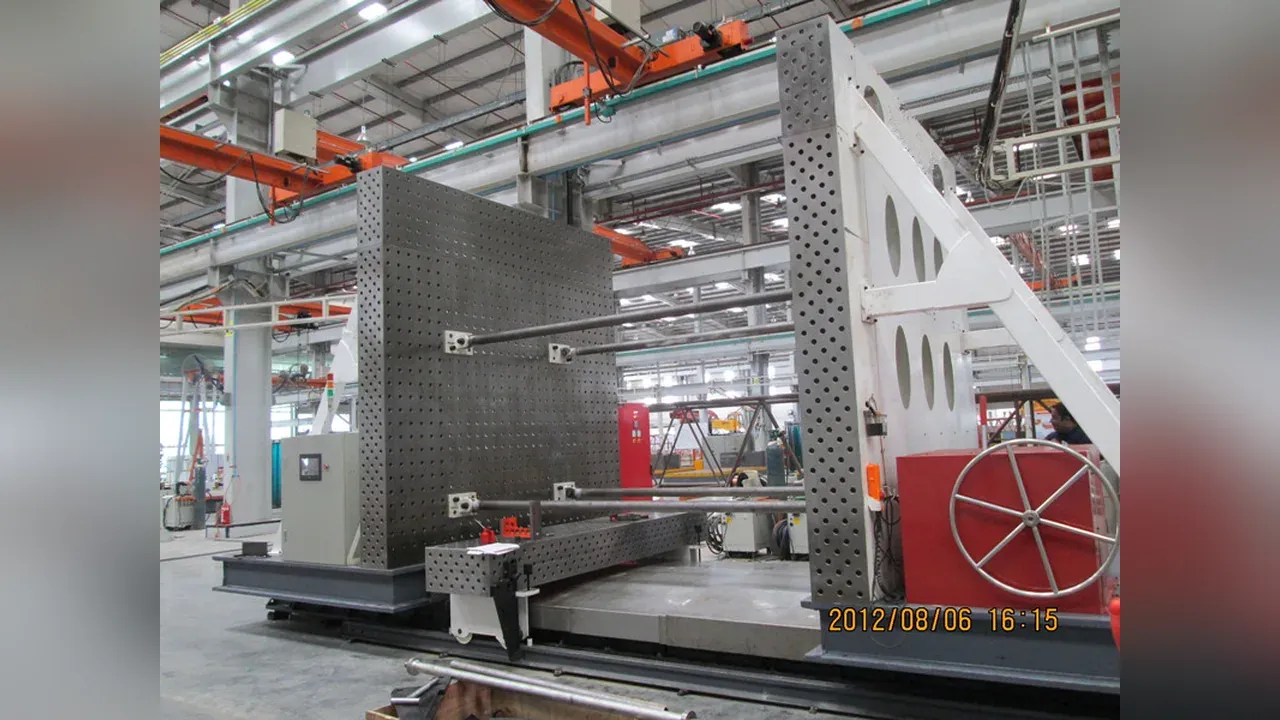
The supplied project portfolio identifies SANY Heavy Industry India Private Limited and crane standard-section or boom assembly tooling. The photographs can help a buyer recognize an application type and formulate questions about a similar assembly. They do not establish a universal cycle time, cost reduction or dimensional result. No such measurements were supplied with the image set used for this website.
Review the case page as a visual reference, then explain how your project differs. A different connection design, assembly size or process can change the tooling requirements. The value of the reference is the technical conversation it helps begin. It is not evidence that the same physical arrangement can be transferred unchanged to another crane product or production environment.
Clarify the commercial scope
Custom tooling projects need a quotation tied to the technical package. Identify the included equipment, standard accessories, dedicated elements and documentation. Ask which activities occur before shipment and which are planned at the buyer's facility. If the project involves other suppliers, confirm how their work and interfaces relate to the proposed tooling order.
Delivery timing depends on the agreed design, materials and production scope. Do not apply a general standard-product lead-time reference to a custom crane fixture without confirmation. State the destination and requested trade term so that packaging and transport can be discussed for the actual equipment. The written quotation and order agreement should establish those responsibilities rather than a general company capability page.
Prepare the technical inquiry
Send assembly and connection drawings, member dimensions, materials and the product variants required. Add the loading and joining sequence, existing equipment interfaces and the acceptance information that the tooling proposal needs to address. Identify the project contact and drawing revision. Discuss confidentiality before transmitting sensitive files if an NDA is needed.
Contact [email protected] for a project-specific review. The SANY India case and custom fixture page provide related SANWZB information. This article is informed by the supplied technical sources on boom and standard-section tooling. Their historical examples are kept separate from the current proposal so that your purchase can be based on an explicit equipment scope, confirmed requirements and the responsible engineering review.
Source and related resources
Based on the supplied SANWZB company archive: Original company article 468; Original company article 459. Historical website publication dates are kept separate from the events discussed.
System selection guide · Custom fixture requirements · Discuss your project