
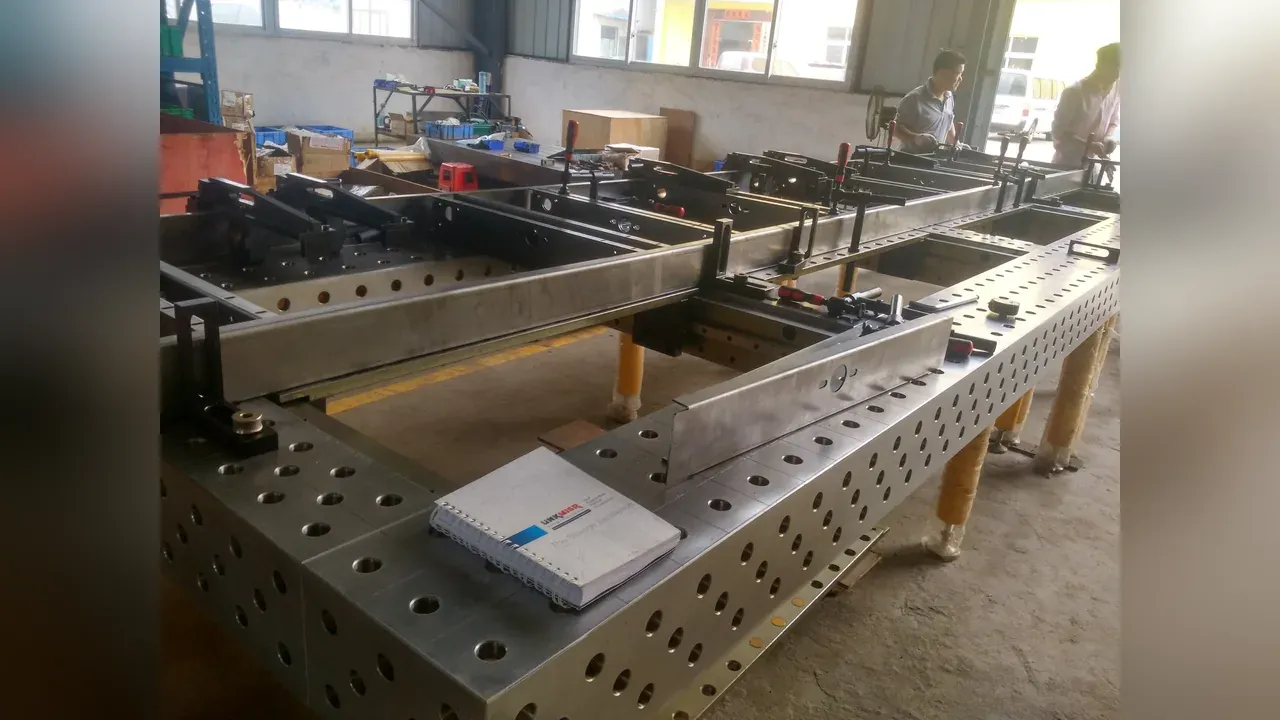
Modular fixtures in modern welding production
A modular fixture system is a set of compatible components that can be organized into a workholding arrangement for a particular task. SANWZB's supplied technical material discusses this approach in welding production, especially where assemblies and product variants change. This article explains how an industrial buyer can evaluate the idea and prepare an inquiry. It does not assume that modular tooling is appropriate for every process or promise a particular improvement in productivity, cost or finished-part accuracy.
Define the production mix
Start with the parts that the fixture inventory is expected to support. List their drawings, dimensions, materials and production quantities. Identify which features they share and which require different locating arrangements. A flexible system discussion becomes more useful when it refers to a defined set of assemblies rather than an unlimited ability to handle future products.
Consider the frequency and nature of changes. Switching between related frames may require a different arrangement from moving between unrelated assemblies. Distinguish frequent changes from occasional development work. This information helps the supplier discuss the appropriate balance of reusable components and dedicated elements. It also gives the buyer a clearer basis for comparing a modular approach with the equipment already used in the workshop.
Understand the different jobs inside a fixture
Supports, locating elements and clamps serve different purposes. Supports provide the intended contact arrangement, locating elements establish the references, and clamps hold the components in the reviewed position. The actual design may combine those functions in specific components, but the engineering questions should remain understandable. Simply adding more tooling does not establish that the part is correctly located.
Use the assembly drawing to identify the relevant references. Explain which surfaces can accept contact and which need to remain accessible. Include the joining sequence in that discussion. A fixture should be reviewed around the actual task, not assembled from an attractive accessory collection without a defined layout. Ask the supplier to explain the proposed component roles in the context of the part being manufactured.
Choose a compatible system
SANWZB offers D16, D22 and D28 table system families in the imported catalog. The selected family establishes an important starting point for the table and accessory discussion. Verify the specifications of every component proposed for the arrangement. Do not infer compatibility between different bore systems or another supplier's equipment from a similar product photograph.
If the workshop already owns fixtures, provide their interface dimensions and relevant drawings. The supplier can then discuss the intended combination or identify questions requiring further review. Any adapters or custom connections should be specified as part of the proposal. A clear compatibility review is more valuable than a general statement that modular components are interchangeable, because interchangeability applies only within the confirmed system and scope.
Compare table formats against the assembly
The catalog includes 2D and 3D formats and various geometries. Review the actual working faces, dimensions and interfaces of the models under consideration. Think about where the locating components need to sit and which areas of the assembly require access. The most suitable format depends on those requirements rather than an assumption that the most elaborate table is always the best choice.
Also consider the supporting structure and the space around the table. A working surface alone does not describe the complete installation. Ask the quotation to identify what is included and what is optional. Where the table connects to existing equipment or custom supports, provide the interface information before the layout is finalized. That keeps the selection tied to the physical conditions of the workshop.
Make the first layout specific
A practical evaluation can begin with one defined assembly or part family. Prepare the layout around its references, supports and clamping needs. Count the components required at the same time and identify any custom parts. This creates a concrete equipment list that can be reviewed against the drawing and compared with the proposed quotation.
The first layout should also show how the part is loaded and removed. Access constraints can be missed when attention is focused only on holding the completed assembly. Review the sequence with the people responsible for the actual operation. This is a way to identify questions early, not a substitute for the engineering checks and acceptance requirements appropriate to the selected equipment and manufacturing process.
Plan how components will be reused
Reusability should be described through actual layouts. Identify which components are shared between jobs and which remain assigned to a particular assembly. If multiple stations operate simultaneously, check whether the shared inventory is sufficient. A component that is available in principle may not be available when another station is using it. The equipment plan should reflect the intended production arrangement.
Keep the common components separate from dedicated inserts and project-specific parts in the records. This helps the buyer understand where the flexibility comes from and where another product may require additional tooling. It also supports later purchasing discussions. Instead of requesting more components generally, the workshop can identify the installed system, the existing inventory and the specific new layout that needs to be supported.
Control the changeover information
A rearrangeable fixture needs a documented way to reproduce the intended configuration. Retain a layout, component list and relevant assembly instructions for each job. Identify the drawing revision and the person responsible for approving changes. The records should make it possible to distinguish the current arrangement from an earlier proposal or a photograph taken during development.
When a part changes, review the effects on locating features, supports and access. A small drawing revision can affect the fixture even if the assembly still looks similar. Update the records after the change is agreed. This does not require an assumed digital management system; it requires consistent information that the workshop can actually use. The appropriate format depends on the buyer's existing procedures and production needs.
Organize the physical inventory
Component storage and identification affect the usefulness of a modular inventory. Decide how parts are named, grouped and returned after a job. Keep the relevant system information available so that similar-looking items are not confused. A clear inventory supports the layout documents and helps the team identify which components are available for the next setup.
Include the handling and care information relevant to the supplied equipment. Ask for the applicable manuals rather than adopting maintenance advice from an unrelated product. If the installation includes several materials or surface treatments, retain the correct information for each. The objective is to keep the physical components and their records understandable over time, not to claim that modular tooling is maintenance-free or automatically organized.
Evaluate dimensional and inspection requirements separately
The table, fixture components and completed assembly each have requirements that need clear definition. A product-level specification should not automatically be treated as a guarantee for the finished weldment. Communicate the relevant drawing requirements and ask what information is needed to review the proposed arrangement. If special inspection documents are required, identify them before the order is placed.
The acceptance plan should state what will be checked and by whom. Where a project requires application evaluation, include the relevant conditions and scope. Keep proposed performance, contractual requirements and observed results separate in the records. This avoids overstating what a table specification or general technical article establishes and gives the engineering team a more precise basis for deciding whether the arrangement meets its needs.
Assess economics using the actual task
A modular system may be considered because components can be reused, but the financial value depends on the production context. Identify the existing tooling method, the planned product mix and the resources needed to change between jobs. An evaluation should account for the actual layouts and inventory rather than assume that every component will be reused equally often.
Do not transfer a historical promotional percentage into a new investment forecast. Compare defined activities under conditions that the buyer understands. If a benefit is expected but not demonstrated, label it as an expectation. This makes the business discussion more useful and prevents a broad statement about flexibility from being treated as a measured outcome for a factory that has not yet evaluated the equipment.
Include documentation and support in the purchase
Ask the quotation to identify the table, support structure, standard components, custom parts and documentation supplied. SANWZB's FAQ describes electronic brochures, manuals, operation videos and remote training that can be discussed for relevant products. Explain what your team needs so that the applicable support can be confirmed. Do not assume a particular training duration or service commitment from that general description.
For international orders, state the destination and the trade term you want to discuss. Confirm packaging, shipping responsibilities and the production schedule for the actual order. General availability or lead-time information does not replace written confirmation for the selected models and quantities. Keeping the commercial scope connected to the equipment list helps both parties understand what the purchase includes.
Prepare a useful modular tooling inquiry
Send the part drawings, dimensions, material, quantities and product variants. Identify the existing table system if there is one, along with the relevant accessory interfaces. Describe the loading method, access constraints and proposed changeovers. Include any special inspection or documentation needs and name the person responsible for technical review. Discuss an NDA first if confidential files require one.
Contact [email protected] to request a brochure and a project-specific quotation. The table system guide, fixturing kit collection and custom fixture page offer related information. This article develops the topic of SANWZB's supplied material on modern modular welding production while keeping equipment selection tied to current product specifications, actual drawings and a defined manufacturing task.
Source and related resources
Based on the supplied SANWZB company archive: Original company article 460. Historical website publication dates are kept separate from the events discussed.
System selection guide · Custom fixture requirements · Discuss your project